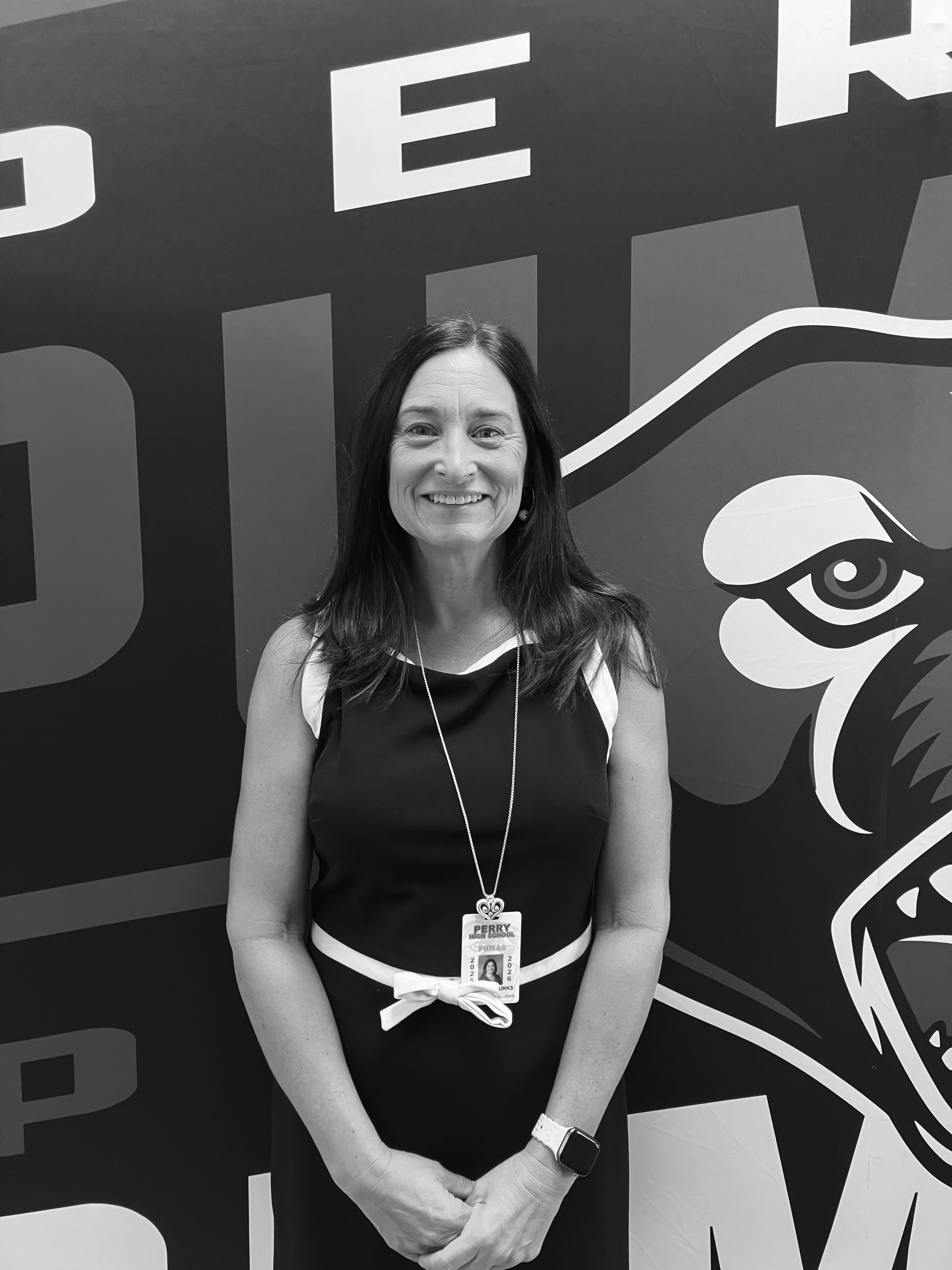
When it comes to high school sports in Arizona, few people see the big picture quite like Jennifer Burks. Serving on the Arizona Interscholastic Association’s (AIA) Executive Board, Burks helps shape the future of athletics for thousands of students across the state.
“The easiest way to think about it is kind of like the United States government,” Burks explains. “The AIA has an Executive Board, a Legislative Council, and an Executive Director with a staff. The Executive Board is where we discuss and vote on major policy decisions, appeals, and changes. Basically, we help decide what’s going to happen across all Arizona high school sports.”
The Executive Board, where Burks has now served for nearly five years, acts as both a decision-making and a problem-solving body. They vote on proposed changes to AIA policy, help finalize conference and region placements for schools, and act as the final step for student-athletes who appeal decisions that could impact their eligibility.
Meanwhile, the Legislative Council, made up of representatives from every conference, focuses on creating and revising bylaws. Together, the two groups form the foundation of how high school sports run across the state.
Burks first joined the Executive Board shortly after the COVID-19 pandemic, in a time when emotions around sports were running high. “During COVID, the person representing our conference on the board voted for us not to play,” she recalls. “That decision upset a lot of people. When it came time for a new representative, some people asked me to run. I put my name in, and I was voted on.”
It’s a role she’s embraced wholeheartedly. This is now Burks’s second term on the board, a commitment that requires balancing time, leadership, and a sharp understanding of how decisions impact not just schools, but thousands of student-athletes across the state.
She describes her work as a blend of big-picture leadership and personal responsibility. One day might involve reviewing where schools are placed in their conferences, while another might bring a difficult hardship appeal, cases where a student is asking for eligibility exceptions due to personal circumstances. These decisions are often high stakes, as they determine whether athletes can continue playing the sports they love.
“It’s about more than just sports,” Burks says. “It’s about making sure opportunities are fair, safe, and meaningful for everyone involved.”
Her path into AIA leadership reflects the trust others have placed in her, and the commitment she feels to Arizona’s student-athletes. With nearly five years on the board, Burks has seen firsthand how policies can affect entire communities, not just athletes. Whether it’s navigating pandemic-era decisions or looking toward the future of Arizona high school sports, she’s been there to help shape the conversation.
For many students, the AIA may feel distant, something that exists in the background. But leaders like Burks prove just how important those behind-the-scenes roles really are.