
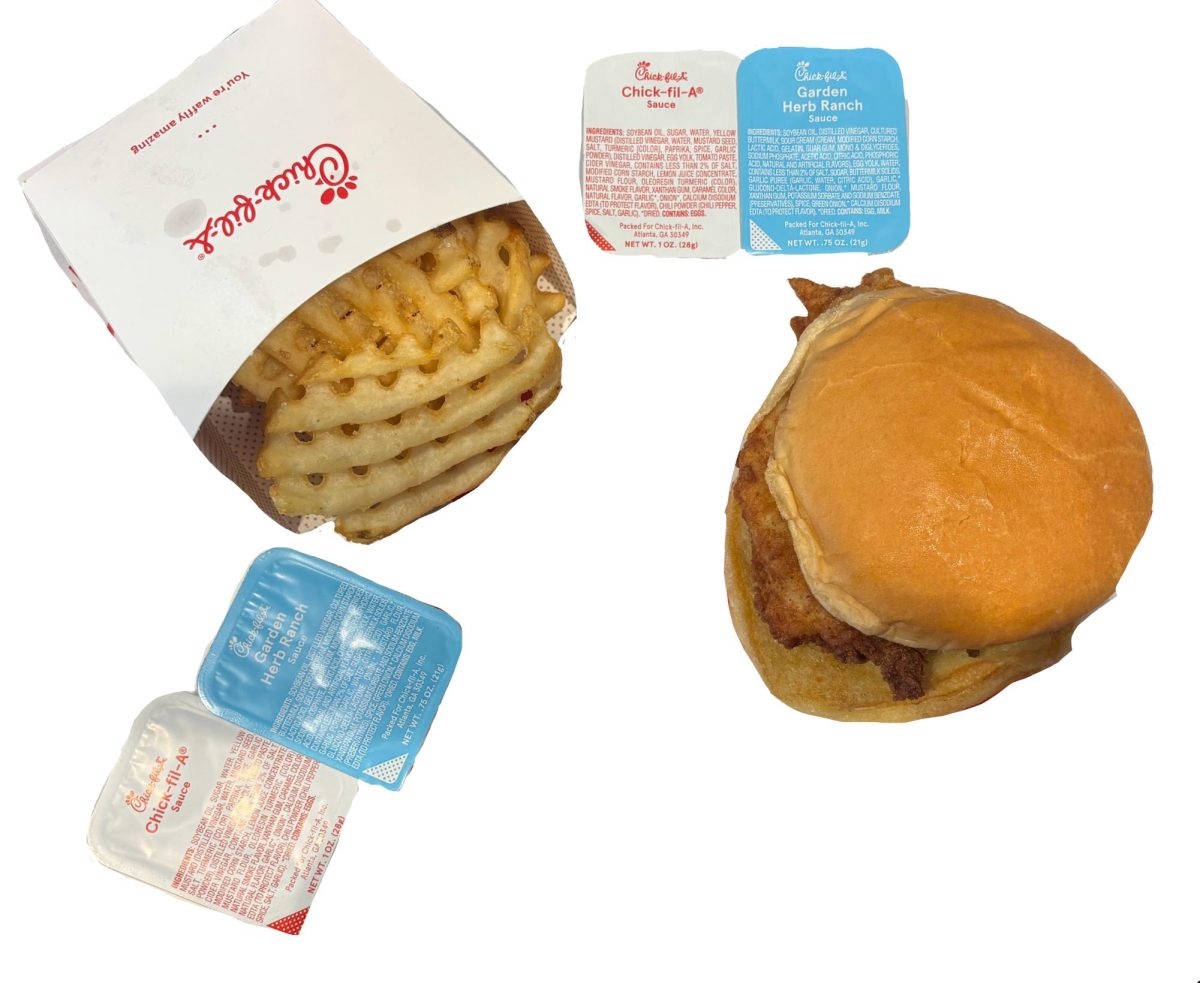
With constant access to vending machines, drive-thrus, and sugary drinks, many teens build their diets around fast food that can be received quickly compared to healthy options due to the overall aspect of timeliness. Convenience often influences what students choose to eat. With busy schedules, early mornings, and tight budgets, teens feel more compelled to reach for meals immediately available or skip the meal altogether. Fast food continues to dominate the food industry with buildings on every corner, encouraging teens to choose the easiest food opportunities.
As teens juggle school, sports, and work, food that is closest and cheapest replaces proper nutrition. Teenage food identity consists mainly of food that is quickly made as well as drinks to get them through the day.
Junior Courtney Heddleston explained why she chooses to reach for energy drinks in the mornings. Heddleston elaborated, “I get pretty tired during the middle of the day… I think because nobody sleeps, everyone stays up on their phones and is tired all the time.” Teenage habits and lifestyles have an impact on the food aspect of teenage lives. With the growth of energy drink popularity, many teens reach for the large dose of caffeine and sugar, likely due to busy schedules filled with activities.
On top of that, with constant access to fast food almost everywhere, students rely on plazas filled with different options. The convenience of fast food appeals to many teenagers who search for quick or instant meals without the need to put in the effort to cook. Senior Jacoby Mathis elaborated, “I’m too lazy to make stuff… so I’ll get fast food,” he explained, “we [students] don’t know how to cook.”
Health and physical education teacher Keddi Kerby elaborated more on how student habits affect daily diets. Kerby explained, “Your eating habits now, you’re building those for the rest of your life… only eating fast food when it’s convenient and putting off good nutrition… is not good for your health.”
According to The Hill, a study done by Centers for Disease Control and Prevention (CDC) Health Action in 2020 results showed, “young people received 13.8 percent of their daily calories from fast food between 2015 and 2018, up from 12.4 percent from 2011 to 2012.”
Teen food culture has become centered on speed, access, and convenience, often at the expense of good nutrition. While the convenience-driven culture feels normal now, understanding why teens choose quick, unhealthy options is important to discover overall teen food identity.
